Stone Money: Palau's Ancient System of Social Trust
"The value of a stone is not in its weight, but in the journey taken to bring it home."
To understand Palau, you must look past the turquoise waters of the Rock Islands and into the profound social architecture that has held these islands together for centuries.
* Stone Money represents an ancient, pre-modern system of value exchange and social obligation. * Its usage was intrinsically tied to specific communal practices and ceremonial roles within Palauan society. * The tradition continues to resonate in modern Palauan customs, albeit in a transformed context. * Understanding this history deepens the appreciation for Palau's unique cultural identity.
What is Stone Money and its original function?
The sun beats down on a dusty path in a remote village in 2025 as an elder gestures toward a massive, weathered disc partially embedded in the earth. To a casual observer, it looks like a heavy, useless relic of a bygone era.
But to the community, that stone represents a recorded history of a family's honor or a significant social contract.
In the traditional context, "Stone Money" refers to large, circular objects—often made of limestone or coral—that served as a medium of exchange. Unlike modern paper currency that you can slip into a pocket, these items were often too large or too heavy to be moved frequently.
This physical characteristic is key to understanding their original function.
They were not meant for buying daily groceries or paying for a quick meal; instead, they functioned as a way to facilitate large-scale social transfers, such as dowries, compensation for disputes, or significant communal gifts.
The value of these stones was never based on the intrinsic weight of the material itself. Instead, the value was derived from the consensus of the community and the historical context of the stone's acquisition. It was a system of value based on social truth rather than metallic gold.
While a modern traveler might see a commodity, a Palauan ancestor saw a living record of a promise kept.
But how did such a heavy, stationary object actually function in a society that needed to move?

Tracing the historical roots: When and why did this evolve?
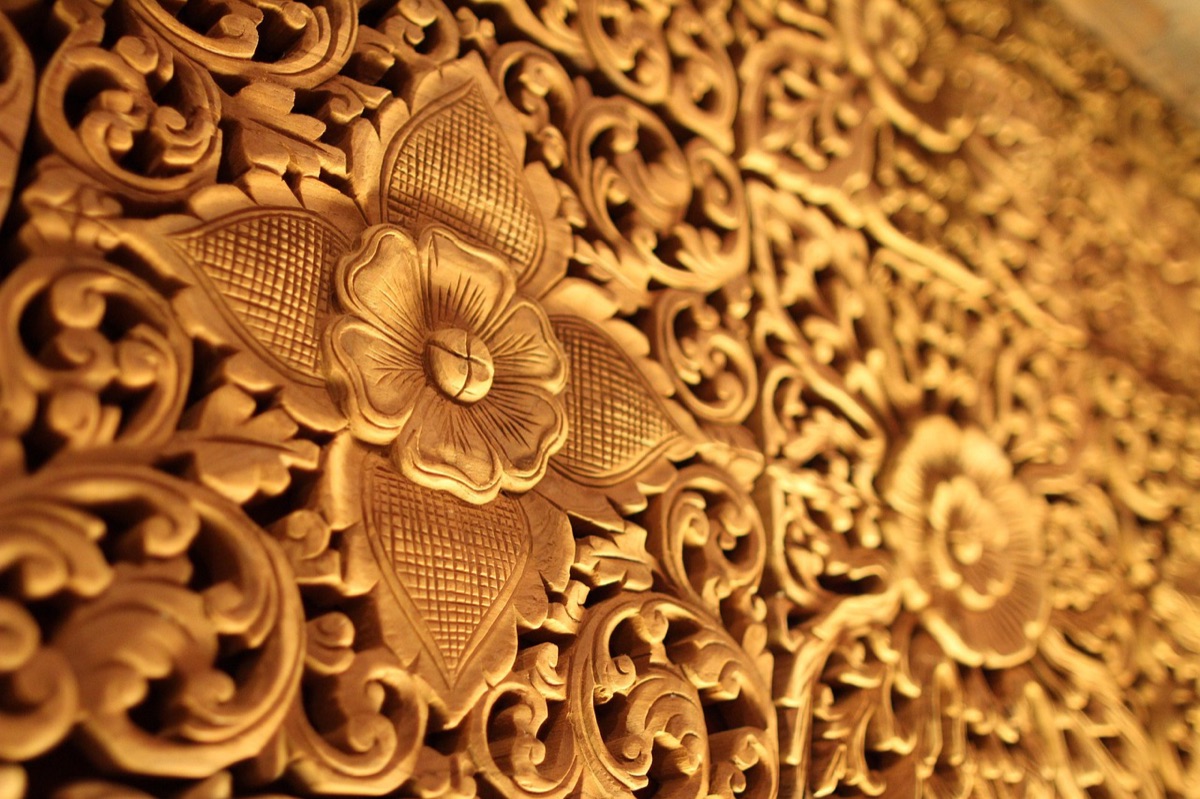
Walking through a traditional *bai* (meeting house) in a quiet village in the early morning of 2026, you notice the intricate carvings on the beams that tell stories of ancestors and legendary feats.
It is in this setting—the heart of Palauan governance—that the systems of value and social hierarchy were forged.
The systems of exchange in the Pacific islands, including the traditions seen in Palau, evolved over centuries of isolation and inter-island interaction. While the exact timeline of specific stone types varies, these systems supported a highly organized societal structure.
In traditional Palauan life, villages were often organized around a hierarchy of chiefs and elders. The exchange of significant items helped manage resources, solidify alliances between different clans, and maintain a balance of power within the village hierarchy.
As societies grew more complex, the need for a way to record "who owed what to whom" became essential. The transition from simple barter to more symbolic, permanent objects allowed for a way to manage wealth that was tied to lineage rather than individual hoarding.
This continuity of tradition ensured that even as external influences reached the islands, the internal social glue remained intact.
However, the transition from ancient practice to modern reality wasn't always a smooth one.
The ritual and social context: How was Stone Money used in daily life?
Imagine a large communal feast under the shade of a massive banyan tree at dusk. The air is thick with the scent of roasted breadfruit and the sound of rhythmic drumming. A group of elders gathers, their expressions serious as they discuss a matter of great importance to the village.
This is not a marketplace; it is a courtroom and a sanctuary of tradition.
In these settings, the exchange of significant items followed a strict ceremonial protocol. It was rarely a simple "trade." Instead, it was a ritualized event involving specific roles:
- The Proposal: A family or clan would initiate a request or a response to a social need (such as a marriage or a settlement).
- The Deliberation: Elders and chiefs would meet to determine the appropriate value or the specific item required to maintain social harmony.
- The Presentation: The item would be presented in a public setting, often during a feast or a rite of passage.
- The Witnessing: The community acted as the "bank." The presence of witnesses ensured that the transfer of value was recorded in the collective memory of the village.
Because these items were often tied to specific family lineages, they could not be easily "spent" like modern cash. They were transferred to settle debts of honor or to cement a bond between two powerful families.
The weight of the stone was a physical representation of the weight of the social obligation.
But how does a tradition built on heavy stone survive in a world of digital banking?
Modern echoes: Stone Money in contemporary Palauan customs
A local guide in Koror points toward a museum display of traditional artifacts in the afternoon of 2026, then gestures toward the bustling modern streets where people use smartphones and credit cards. The transition is jarring, yet the underlying values of the community remain remarkably resilient.
While you won't see someone paying for a taxi with a large stone disc, the *spirit* of these traditions persists in modern Palauan life. The concepts of communal obligation, respect for elders, and the importance of family lineage still dictate much of the social fabric.
In many ways, the modern legal and social systems in Palau are built upon the foundations of these ancient consensus-based traditions.
Today, these items are often preserved in museums or held by families as sacred heirlooms. They serve as a bridge between the past and the present. While the "currency" aspect has faded into history, the "identity" aspect has only grown stronger.
For the local community, these objects are not just relics; they are reminders of a time when value was something you could see, touch, and share with your entire community.
But there is a limit to how much of the past can be directly applied to the present.
It is important to note that these traditional systems were designed for a specific social structure that has changed. In a globalized economy, the communal consensus that gave a stone its value cannot always translate to the individualistic nature of modern commerce.
The weight of the stone was meant for a village, not a global market.
Still, the legacy of that weight remains.
Preserving the narrative: Why is this culture important to Palau today?
Standing on a pier overlooking the vast Pacific at sunrise, you realize that the islands are much more than a beautiful backdrop for a vacation. They are a living testament to human ingenuity and social organization.
To see the stones as mere "money" is to miss the entire story of the people who carved them.
Preserving this intangible cultural heritage is vital for Palau's national identity. As the country navigates the complexities of the 21st century—including tourism, environmental protection, and global politics—the history of its social structures provides a sense of stability and purpose.
For visitors, understanding this history changes the way you travel. It moves you from being a mere spectator of a "tropical paradise" to being a respectful guest in a living culture.
It teaches us that true value is often found in the relationships we build and the traditions we honor, rather than in the things we accumulate.
| Feature | Traditional Stone Value | Modern Currency Value |
|---|---|---|
| Primary Basis | Social consensus and lineage | Market demand and gold/fiat backing |
| Portability | Low (often stationary or ceremonial) | High (digital or physical) |
| Purpose | Social harmony and honor | Transactional exchange |
| Witnessing | Community-based oral history | Centralized banking/digital logs |
#






Comments 0